



The Midterms Changed Washington. Did They Change The Outlook for Energy?
The 2026 midterm elections have reshaped the political landscape in Washington, but the fundamental drivers of U.S. energy demand remain firmly intact.
The 2026 midterm elections have reshaped Washington, with Democrats gaining control of both chambers of Congress. While the results could influence energy policy and near-term market dynamics, we believe they are unlikely to materially change the long-term outlook for U.S. energy infrastructure.
The forces shaping the future of energy—America’s leadership in oil and natural gas production, accelerating electricity demand, and the rapid expansion of artificial intelligence (AI)—extend well beyond election cycles.
Near-Term Implications: Energy Prices and Policy
One potential near-term development to watch is a reduction in the geopolitical risk premium embedded in crude oil prices. If geopolitical tensions ease, lower oil prices could translate into lower gasoline prices for consumers. Declining diesel prices could also reduce transportation and distribution costs, helping to moderate future inflationary pressures. These potential benefits, however, will depend largely on geopolitical developments and global energy supply and demand rather than the election results alone.
From a policy perspective, the shift in congressional control introduces a different legislative and regulatory environment. While changes in oversight and energy policy priorities are possible, we do not anticipate that the election results alone will materially alter the near-term trajectory of U.S. oil and natural gas production.
Importantly, the U.S. remains the world’s largest producer of both oil and natural gas, reinforcing its position as a global energy leader. Its abundant domestic resources and extensive energy infrastructure provide a competitive advantage that is not dependent on any single election outcome.
What Doesn’t Change: AI Is Driving the Next Industrial Revolution
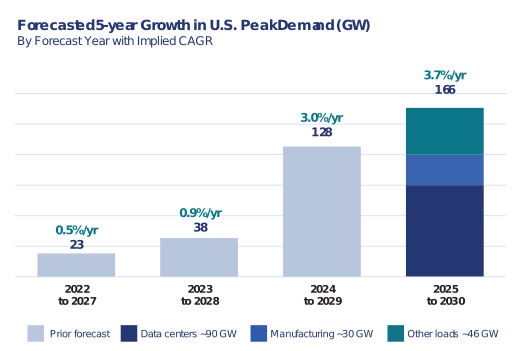
While elections can influence policy, they do not change the structural forces transforming the U.S. economy.
AI is emerging as the next industrial revolution, creating substantial new demand for computing power, data centers, and the electricity required to support them. This transformation is already driving a significant shift in the outlook for U.S. electricity consumption. U.S. peak electricity demand is forecast to increase approximately 20% between 2025 and 2030, representing an additional 166 gigawatts of demand. Data centers alone are projected to account for approximately 90 gigawatts of that increase.
After years of relatively modest growth, electricity demand is entering a period of meaningful acceleration. Meeting this demand will require substantial investment in power generation, transmission, and the energy infrastructure needed to deliver reliable electricity.
Electricity is the New Oil™
Just as oil powered the industrial economy, electricity is becoming the essential fuel of the AI-driven economy. Electricity is the New Oil™ reflects a fundamental shift in the role energy plays in economic growth. Access to reliable, affordable electricity is increasingly becoming a determining factor in where data centers are built, how quickly AI infrastructure can expand, and which countries are best positioned to compete in the global AI economy.
The magnitude of this transformation is reflected in the capital spending commitments of the world’s largest technology companies. Combined capital expenditures by Microsoft, Alphabet, Amazon, and Meta are projected to approach $1 trillion annually by 2027, nearly six times their combined spending in 2022. Forecasts suggest annual investment could exceed $1 trillion in subsequent years.
Hyperscaler Capex is Heading Toward $1 Trillion a Year
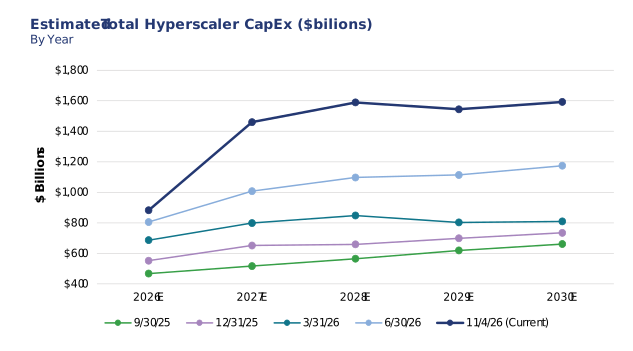
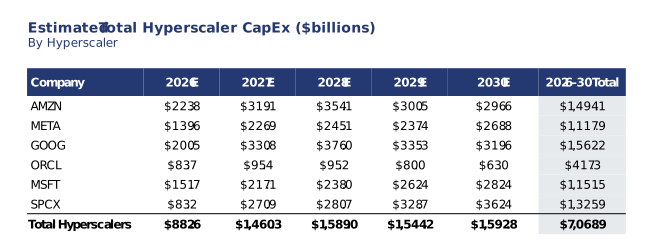
This unprecedented investment reinforces our belief that rising electricity demand represents a long-term structural trend rather than a short-term market cycle.
America’s Natural Gas Advantage Positions the U.S. to Lead
As the global race for AI leadership accelerates, access to reliable, affordable electricity will become an increasingly important competitive advantage. The U.S. is particularly well positioned because of its abundant, low-cost natural gas resources and extensive energy infrastructure network. Natural gas can provide the dependable, dispatchable power needed to support energy-intensive data centers while complementing renewable energy and other generation sources.
This growing demand for electricity also has important implications beyond power generation. Increased natural gas consumption could drive additional investment in pipelines, processing facilities, storage, and other critical infrastructure required to connect energy supply with demand. While the political landscape may evolve, America’s underlying energy advantages remain intact. We believe these resources position the U.S. to compete effectively in the global AI economy and support a multiyear opportunity for energy infrastructure investment.
The Bottom Line: Energy Fundamentals Endure
The midterm election results may influence near-term energy prices, policy priorities, and market sentiment. However, they do not change the fundamental forces driving the long-term outlook for U.S. energy. AI is transforming the economy. Electricity demand is accelerating. And America’s abundant natural gas resources provide a significant competitive advantage in meeting that demand.
Electricity is the New Oil™—and the infrastructure required to produce, transport, and deliver reliable energy will be essential to powering the next industrial revolution.
For energy investors, the most important takeaway from the midterms may be what hasn’t changed: the structural growth opportunity across U.S. energy infrastructure remains firmly intact.
Explore the Investment Opportunities Behind Rising Energy Demand
Discover how Tortoise Capital’s energy infrastructure strategies provide exposure to the companies helping power America’s evolving energy needs.
Important Information
Nothing contained in this communication constitutes tax, legal, or investment advice. Investors must consult their tax advisor or legal counsel for advice and information concerning their particular situation. This communication contains certain statements that may include “forward-looking statements.” All statements, other than statements of historical fact, included herein are “forward-looking statements.” Although Tortoise Capital believes that the expectations reflected in these forward-looking statements are reasonable, they do involve assumptions, risks and uncertainties, and these expectations may prove to be incorrect. Actual events could differ materially from those anticipated in these forward-looking statements as a result of a variety of factors. You should not place undue reliance on these forward-looking statements. This communication reflects our views and opinions as of the date herein, which are subject to change at any time based on market and other conditions. We disclaim any responsibility to update these views. These views should not be relied on as investment advice or an indication of trading intention. Discussion or analysis of any specific company-related news or investment sectors are meant primarily as a result of recent newsworthy events surrounding those companies or by way of providing updates on certain sectors of the market. Tortoise Capital, through its family of registered investment advisers, does provide investment advice to Tortoise related funds and others that include investment into those sectors or companies discussed in this communication. As a result, Tortoise Capital does stand to beneficially profit from any rise in value from many of the companies mentioned herein including companies within the investment sectors broadly discussed.